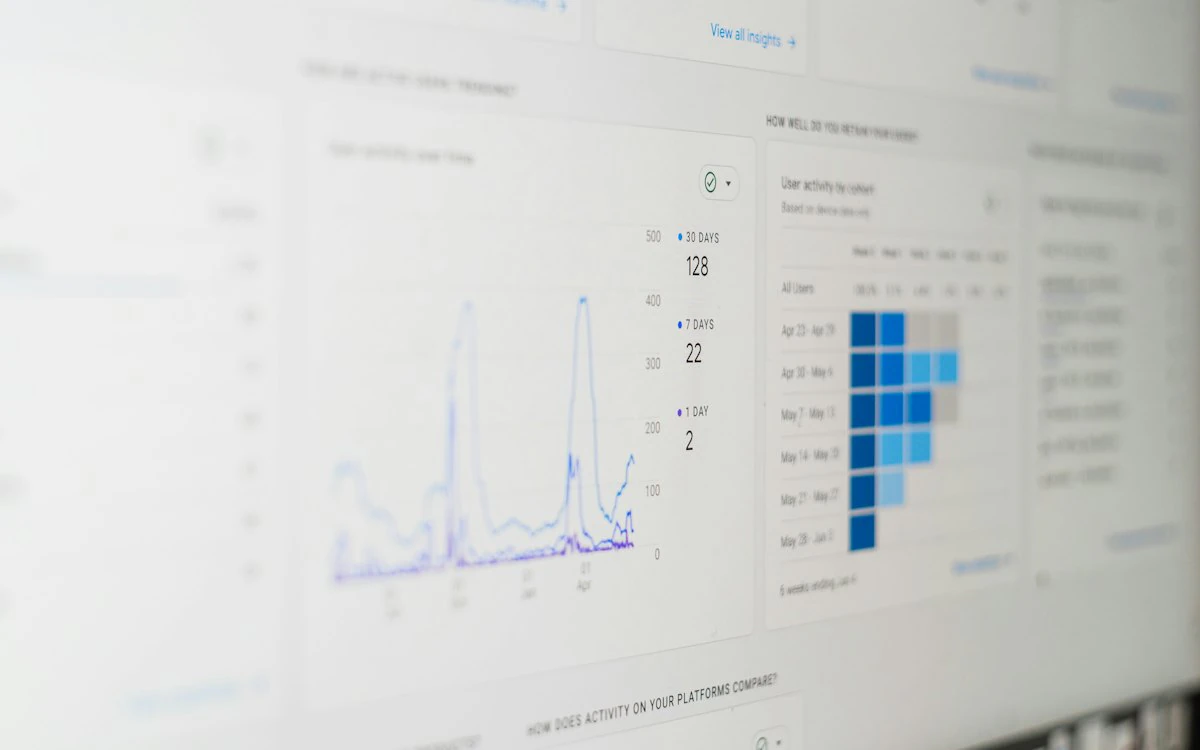
Marketing teams have more data than ever.
Every campaign generates numbers. Every advertising platform provides reports. Analytics tools track website behavior. CRM systems contain leads and pipeline information. Email platforms measure opens and clicks. Social platforms report engagement.
The problem isn't necessarily a lack of data.
The problem is knowing what all that data actually means—and what to do about it.
A marketing leader might see that paid advertising generated more clicks this month, organic traffic increased, and email engagement improved. But those numbers alone don't answer the questions that matter most:
- Which channels are actually driving business results?
- Which campaigns are worth increasing the budget for?
- Where is marketing performance declining?
- Why did performance change?
- Which activities are generating qualified leads and pipeline?
- Where should the team focus next?
This is where marketing intelligence comes in.
Marketing intelligence is the process of collecting, connecting, analyzing, and interpreting marketing data to help businesses make better decisions about marketing strategy, budgets, campaigns, channels, and growth.
Modern marketing intelligence goes beyond simply reporting numbers. It helps turn disconnected data into a clearer understanding of performance and, increasingly, uses AI to identify patterns, problems, opportunities, and potential next actions.
For businesses using multiple marketing channels, this can create a more complete view of performance and help marketing teams spend less time searching for answers and more time acting on them.
What Is Marketing Intelligence?
Marketing intelligence is the use of marketing data, analysis, technology, and business context to understand marketing performance and make better decisions.
In simple terms:
Marketing intelligence turns marketing data into information that helps people decide what to do next.
Traditional marketing reporting often focuses on what happened.
For example:
- Google Ads spent $20,000.
- Website traffic increased 15%.
- Email open rates reached 32%.
- The company generated 500 leads.
- Social engagement increased 10%.
These numbers can be useful, but they are only the starting point.
Marketing intelligence asks deeper questions:
What is happening?
What is working?
What isn't working?
Why is it happening?
What should we do next?
This shift—from reporting activity to understanding performance—is one of the key differences between basic marketing reporting and marketing intelligence.
Marketing Data vs. Analytics vs. Insights vs. Intelligence
These terms are often used interchangeably, but they describe different stages of the decision-making process.
1. Marketing Data
Data is the raw information produced by your marketing activities.
Examples include:
- Impressions
- Clicks
- Ad spend
- Website sessions
- Conversion rates
- Leads
- Revenue
- Email opens
- Email clicks
- Search rankings
- Social engagement
Data tells you what was recorded.
2. Marketing Analytics
Analytics involves examining that data to understand patterns and performance.
For example:
"The cost per lead increased by 28% over the last 30 days."
Analytics helps explain what happened in the data.
3. Marketing Insights
An insight goes a step further.
For example:
"The increase in cost per lead is primarily coming from two paid campaigns that have experienced declining conversion rates."
Now you have more useful information about the problem.
4. Marketing Intelligence
Marketing intelligence connects those insights to decisions.
For example:
"Pause the two declining campaigns, shift part of the budget toward the campaigns generating lower-cost qualified leads, and monitor performance over the next seven days."
This connects:
Data → Analysis → Insight → Decision → Action
That is the real value of marketing intelligence.
Why Is Marketing Intelligence Important?
Marketing has become increasingly complex.
A business may run paid campaigns across several advertising platforms while also investing in SEO, social media, email marketing, outbound campaigns, content, partnerships, and other acquisition channels.
Each platform produces its own data.
That creates a common problem:
Businesses have plenty of marketing data but not necessarily a single, reliable understanding of marketing performance.
Marketing intelligence helps address this problem.
1. Marketing Data Is Scattered Across Platforms
A typical marketing team may use:
- Google Ads
- Meta Ads
- LinkedIn Ads
- Google Analytics
- Google Search Console
- CRM software
- Email marketing platforms
- Social media platforms
- Outbound tools
- SEO tools
Each system has its own dashboard, metrics, terminology, and reporting structure.
A marketer can spend hours switching between platforms simply to answer a basic question about performance.
Marketing intelligence brings relevant information together so teams can analyze performance from a broader perspective.
2. Marketing Teams Spend Too Much Time Reporting
Reporting is necessary, but manual reporting can become a significant operational burden.
Teams may need to:
- 1.Export data from advertising platforms.
- 2.Download analytics information.
- 3.Pull CRM data.
- 4.Clean spreadsheets.
- 5.Combine different data sources.
- 6.Build charts.
- 7.Create presentations.
- 8.Write performance summaries.
- 9.Explain changes to leadership.
By the time the report is finished, the underlying data may already have changed.
Marketing intelligence can automate much of this process and give teams more time to analyze performance and take action.
3. Dashboards Don't Always Explain Why Something Happened
A dashboard might show that conversion rates declined.
But a chart doesn't necessarily tell you:
- why conversion rates declined,
- which campaign caused the change,
- whether the change is temporary,
- whether the issue is isolated to one channel,
- what other metrics changed at the same time,
- or what the team should do about it.
This is where intelligent analysis becomes valuable.
The goal isn't simply to create another dashboard.
The goal is to make marketing data more understandable and actionable.
How Does Marketing Intelligence Work?
A practical marketing intelligence process can be understood through six stages:
Collect → Connect → Analyze → Understand → Act → Improve
1. Collect
The first step is collecting marketing data from the platforms and systems a business uses.
This can include paid advertising, analytics, SEO, email, social media, outbound marketing, and CRM data.
2. Connect
Data from different sources needs to be brought into a common environment.
Without this step, marketing teams may continue looking at isolated pieces of performance.
For example, an advertising platform might show that a campaign generated leads.
The CRM might show what happened to those leads afterward.
Connecting those systems provides a more complete picture.
3. Analyze
Once the data is connected, it can be analyzed to identify:
- trends,
- changes,
- anomalies,
- performance differences,
- inefficient campaigns,
- high-performing channels,
- conversion patterns,
- opportunities.
4. Understand
Analysis becomes more useful when it is translated into understandable insights.
Instead of simply showing:
CPA increased 22%.
A useful intelligence system should help answer:
What caused the increase?
And:
Does it require action?
5. Act
Insights only create business value when they influence decisions.
Possible actions might include:
- increasing a campaign budget,
- reducing inefficient spending,
- changing targeting,
- improving landing pages,
- adjusting messaging,
- investing more in a high-performing channel,
- investigating an anomaly.
6. Improve
The final step is creating a continuous performance loop.
Measure → Understand → Decide → Act → Improve
The result is a marketing operation that continuously learns from its performance instead of simply documenting what happened at the end of every month.
What Data Does Marketing Intelligence Use?
Marketing intelligence can combine information from many areas of the marketing stack.
Paid Advertising Data
Paid marketing intelligence can include:
- Ad spend
- Impressions
- Clicks
- CTR
- CPC
- CPA
- Conversions
- ROAS
- Campaign performance
- Channel performance
Platforms such as Google Ads, Meta Ads, LinkedIn Ads, and YouTube Ads can provide important parts of this picture.
But looking at each advertising platform independently can make cross-channel comparison difficult.
Organic Marketing Data
Organic marketing intelligence can include:
- Website sessions
- Organic traffic
- Search impressions
- Search clicks
- Keyword performance
- Search rankings
- Engagement
- Landing page performance
- Social interactions
Connecting analytics, search, and social data can provide a broader view of organic performance.
Email and Outbound Data
Email and outbound marketing can contribute:
- Emails sent
- Open rates
- Click rates
- Replies
- Engagement
- Contacts
- Conversions
- Leads generated
These metrics become more useful when they can be connected to downstream business outcomes.
CRM and Pipeline Data
CRM data can provide the business context that marketing platforms often lack.
It may include:
- Leads
- Qualified leads
- Opportunities
- Pipeline
- Customers
- Revenue
- Lead sources
- Campaign sources
This is particularly important because marketing performance shouldn't be evaluated only by clicks or impressions.
The more important question is often:
Did marketing activity contribute to qualified opportunities and revenue?
What Is Cross-Channel Marketing Intelligence?
Cross-channel marketing intelligence means analyzing marketing performance across multiple channels rather than evaluating every channel in isolation.
Consider a company running:
- Google Ads
- Meta Ads
- LinkedIn Ads
- SEO
- Social media
Each platform may report positive results.
But leadership still needs to know:
Which combination of channels is actually contributing to business growth?
A cross-channel view makes it easier to compare performance and understand how different parts of the marketing system work together.
This is especially important when budgets and resources are limited.
Marketing Intelligence vs. Marketing Analytics
Marketing analytics and marketing intelligence are closely related, but they aren't necessarily the same thing.
Marketing analytics focuses on examining marketing data to understand performance, trends, relationships, and outcomes.
Marketing intelligence takes that analysis and connects it with broader context to help people make decisions.
A simplified way to think about it is:
Analyzes data
- Marketing Intelligence
- Connects data, analysis, and decisions
Explains performance
- Marketing Intelligence
- Helps determine what to do next
Often metric-focused
- Marketing Intelligence
- More outcome-focused
Can focus on individual channels
- Marketing Intelligence
- Can connect multiple channels
Answers "what happened?"
- Marketing Intelligence
- Can address "what happened, why, and what next?"
| Marketing Analytics | Marketing Intelligence |
|---|---|
| Analyzes data | Connects data, analysis, and decisions |
| Explains performance | Helps determine what to do next |
| Often metric-focused | More outcome-focused |
| Can focus on individual channels | Can connect multiple channels |
| Answers "what happened?" | Can address "what happened, why, and what next?" |
The two approaches complement each other.
Analytics is an important component of marketing intelligence.
Marketing Intelligence vs. Business Intelligence
Marketing intelligence is also related to business intelligence, but they operate at different levels.
Business intelligence typically looks across the organization.
It may cover:
- Finance
- Sales
- Operations
- Customer service
- Human resources
- Supply chain
- Marketing
Marketing intelligence focuses specifically on marketing performance and marketing-related decisions.
For example, business intelligence might help a company understand overall revenue performance, while marketing intelligence could help explain which marketing channels and campaigns are contributing to pipeline generation.
Connecting marketing intelligence with CRM and revenue information can help bridge the gap between marketing activity and broader business outcomes.
What Are the Benefits of Marketing Intelligence?
A well-designed marketing intelligence system can provide several benefits.
1. A Unified View of Marketing Performance
Instead of checking multiple platforms, teams can work from a connected view of performance.
2. Faster Reporting
Automated data collection and reporting can reduce repetitive manual work.
3. Better Budget Allocation
Marketing teams can identify inefficient spending and areas where additional investment may make sense.
4. Earlier Problem Detection
Performance changes and anomalies can be identified sooner.
5. Better Cross-Channel Understanding
Teams can compare performance across paid, organic, email, social, and other channels.
6. Stronger Marketing Accountability
Connecting marketing activity to leads, pipeline, and revenue can make performance discussions more meaningful.
7. Better Alignment Between Marketing and Leadership
When teams work from a shared performance view, conversations can focus less on conflicting numbers and more on decisions.
8. More Time for Strategy
Reducing manual reporting can give marketing teams more time to optimize campaigns and develop strategy.
What Should a Marketing Intelligence Platform Do?
Not every marketing dashboard is a marketing intelligence platform.
When evaluating marketing intelligence software, businesses should look beyond the number of charts and integrations.
A useful platform should help answer the questions that marketing leaders actually care about.
1. Does it unify marketing data?
A platform should connect relevant data sources and provide a consistent view of performance.
2. Does it support cross-channel analysis?
It should make it easier to compare and understand performance across multiple channels.
3. Does it connect marketing to business outcomes?
Leads, pipeline, and revenue can provide important context for marketing performance.
4. Does it identify problems proactively?
Teams shouldn't have to manually inspect every chart to find something going wrong.
5. Does it provide actionable insights?
A useful system should help users understand not just what changed but why it matters.
6. Can users ask questions naturally?
Natural-language interfaces can make marketing analysis accessible to people who don't want to build complex filters or dashboards.
7. Can it automate executive reporting?
Marketing leaders often need to communicate performance to CEOs, boards, clients, and other stakeholders.
Automated reporting can make that process faster and more consistent.
How AI Is Changing Marketing Intelligence
Artificial intelligence is changing how businesses interact with marketing data.
Traditional analytics generally requires people to know what they want to investigate.
A marketer might open a dashboard, choose a date range, filter campaigns, compare metrics, and manually investigate unusual changes.
AI can make this process more conversational and proactive.
Instead of starting with a dashboard, a marketer can ask:
"Which channel generated the most pipeline this month?"
Or:
"Which campaigns are losing efficiency?"
Or:
"Why did our cost per lead increase?"
Or:
"What should our marketing team focus on this week?"
AI-powered marketing intelligence can analyze connected data, identify patterns, summarize changes, and surface areas that deserve attention.
The important distinction is that AI should not simply generate a narrative around numbers.
The insights need to be grounded in the business's actual marketing data.
What Is AI-Powered Marketing Intelligence?
AI-powered marketing intelligence combines marketing data with artificial intelligence to help businesses analyze performance and make decisions more efficiently.
Instead of requiring teams to manually examine every metric, AI can help identify:
- Significant performance changes
- Anomalies
- Underperforming campaigns
- High-performing channels
- Emerging trends
- Potential opportunities
- Budget efficiency issues
- Relationships between metrics
- Areas requiring attention
The goal isn't to remove marketers from decision-making.
It's to give marketers better information so they can make decisions faster and with greater context.
What Is QuikInsight?
QuikInsight is an AI-powered marketing intelligence platform from Quikit.
While Quikit is the broader business software ecosystem, QuikInsight focuses specifically on marketing performance and intelligence.
QuikInsight brings paid, organic, email, and CRM data into one view and uses AI to help businesses understand:
- What is happening?
- What is working?
- What is not working?
- Why is it happening?
- What should we do next?
Instead of replacing the marketing tools a business already uses, QuikInsight is designed to work above the existing marketing stack and connect the information those tools produce.
You can learn more about what QuikInsight is and how it works in our dedicated guide.
How QuikInsight Approaches Marketing Intelligence
The core idea behind QuikInsight is simple:
Marketing data should lead to better decisions, not just more reports.
The platform brings together information from marketing channels and uses AI to surface meaningful insights.
Its approach can be summarized as:
Unify
Bring paid, organic, email, and CRM information into one view.
Understand
Use AI to analyze performance, identify patterns, changes, anomalies, and opportunities.
Act
Identify what deserves attention and where marketing teams should focus their effort and budget.
Report
Turn marketing performance into executive-ready reports that can be shared with stakeholders.
Improve
Create a continuous loop of measuring, understanding, deciding, acting, and improving.
This moves marketing teams from simply asking:
"What happened?"
toward more useful questions:
"Why did it happen?"
and:
"What should we do next?"
How to Choose a Marketing Intelligence Platform
Choosing a marketing intelligence platform shouldn't be based solely on the number of dashboards, charts, or integrations.
Start with the problems your marketing team needs to solve.
1. Identify Your Data Sources
List the platforms your business currently uses.
Consider:
- Advertising
- Analytics
- SEO
- Social
- Outbound
- CRM
Then determine whether the platform can connect to the sources that matter to you.
2. Look for a Unified View
Ask whether the platform can help you understand marketing performance across channels rather than forcing your team to evaluate each platform separately.
3. Evaluate AI Capabilities
Don't just look for "AI" in the feature list.
Ask what the AI actually does.
Can it:
- analyze your real data?
- identify anomalies?
- explain changes?
- answer questions?
- surface opportunities?
- provide useful recommendations?
4. Connect Marketing to Business Outcomes
A platform that shows clicks and impressions may be useful.
A platform that can connect marketing activity with leads, pipeline, and revenue can provide more meaningful business context.
5. Consider Reporting Requirements
Think about who needs marketing reports.
Your:
- CEO
- CMO
- marketing team
- sales team
- board
- clients
may all need different levels of information.
6. Prioritize Actionability
Ultimately, the platform should help your team make decisions.
A beautiful dashboard isn't enough if marketers still have to spend hours figuring out what the numbers mean.
The Future of Marketing Intelligence
Marketing intelligence is moving toward a more connected and automated model.
The future isn't simply about collecting more data.
It's about making existing data more useful.
Several developments are likely to shape the category:
More connected marketing data
Businesses will continue bringing advertising, analytics, CRM, email, social, and other data sources together.
More AI-assisted analysis
AI will increasingly help marketers investigate performance, identify patterns, and summarize complex information.
More natural-language analytics
Marketers will increasingly expect to ask questions in plain language rather than manually configure complex reports.
More proactive intelligence
Instead of waiting for someone to discover a problem, intelligent systems can surface important changes automatically.
Stronger connections between marketing and revenue
Marketing performance measurement will increasingly move beyond clicks, impressions, and leads toward pipeline, revenue, and business outcomes.
The direction is clear: marketing intelligence is becoming less about reporting what happened and more about understanding what it means and deciding what to do next.
Frequently Asked Questions About Marketing Intelligence
What is marketing intelligence?
Marketing intelligence is the process of collecting, connecting, analyzing, and interpreting marketing data to help businesses make better marketing and growth decisions.
What is an example of marketing intelligence?
An example would be identifying that a particular advertising channel is generating fewer leads at a higher cost while another channel is producing more qualified pipeline, then using that information to reconsider budget allocation.
What is the difference between marketing intelligence and marketing analytics?
Marketing analytics focuses on analyzing marketing data and understanding performance. Marketing intelligence goes further by connecting data and insights to business context and decisions.
Why is marketing intelligence important?
Marketing intelligence helps businesses make sense of fragmented marketing data, identify what is working and what isn't, improve resource allocation, and make faster, more informed decisions.
What does a marketing intelligence platform do?
A marketing intelligence platform can connect marketing data from multiple sources, analyze performance, identify trends and anomalies, provide insights, and help teams decide where to focus their attention.
How does AI improve marketing intelligence?
AI can analyze large amounts of marketing data, identify patterns and anomalies, answer questions in natural language, summarize performance, and surface areas that may require attention.
What data does marketing intelligence use?
Marketing intelligence can use data from advertising platforms, analytics, SEO, social media, email, outbound tools, CRM systems, and other marketing sources.
Is marketing intelligence useful for small businesses?
Yes. Small businesses can benefit from marketing intelligence when they need to understand performance across multiple channels without spending significant amounts of time manually combining reports and analyzing data.
Final Thoughts: Marketing Intelligence Turns Data Into Decisions
Marketing teams don't have a data shortage.
They have a decision-making challenge.
Data lives across advertising platforms, analytics systems, CRM software, email tools, social networks, and other marketing technologies. Reporting tools can show what happened, but businesses increasingly need to understand why it happened and what they should do next.
That's the role of marketing intelligence.
By connecting marketing data, analyzing performance, identifying meaningful patterns, and translating those findings into actionable insights, marketing intelligence can help businesses make better use of their budgets, teams, and opportunities.
And with AI becoming part of the process, marketing intelligence is moving toward a model where teams can interact with their marketing data more naturally and receive useful insights without manually digging through every dashboard.
For businesses looking to move from fragmented marketing reporting to connected, AI-powered marketing intelligence, QuikInsight provides a practical way to bring marketing data together and turn it into decisions.
Stop spending more time finding the numbers. Start understanding what they mean.
Explore QuikInsight and see how AI-powered marketing intelligence can help your team make better marketing decisions.
See it running on your business.
A walkthrough built around how your team works today.