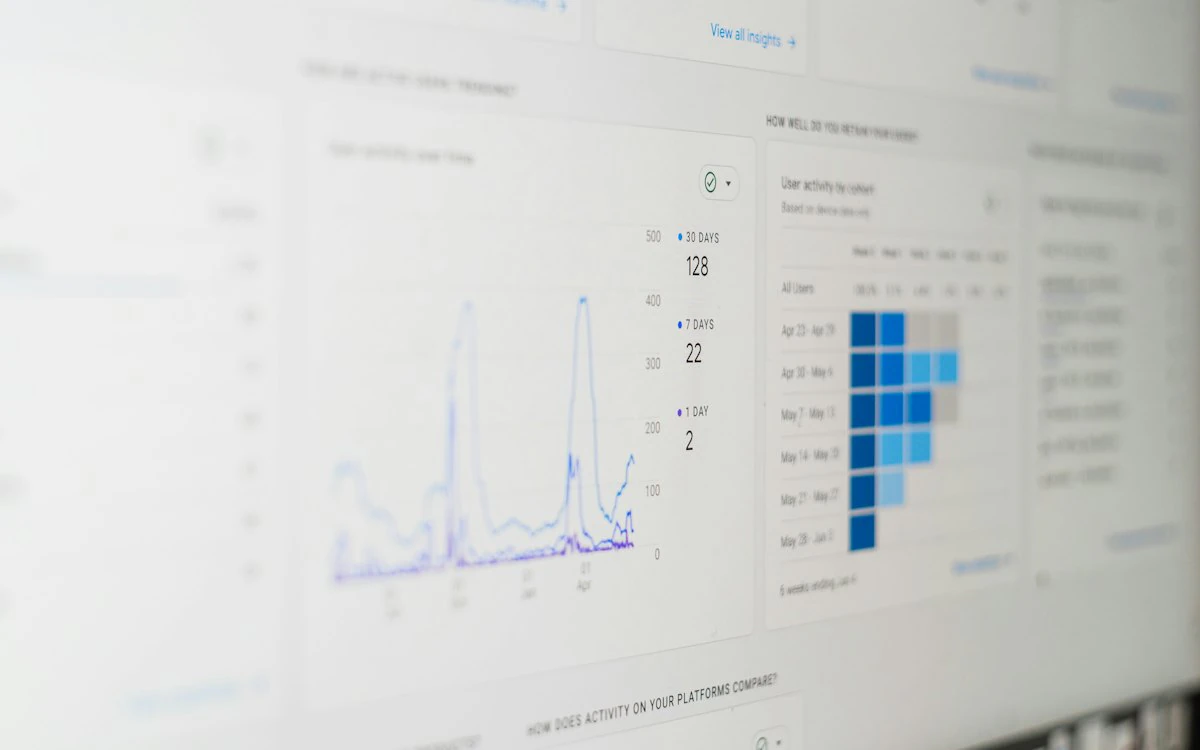
Marketing teams have never had access to more data.
Advertising platforms report impressions, clicks, conversions, and spend. Analytics platforms track website activity. Search tools provide visibility into organic performance. Email platforms report opens and clicks. CRM systems contain leads, opportunities, pipeline, and revenue.
Yet more data does not automatically lead to better marketing decisions.
The real challenge is understanding what the data means.
A marketing team may know that cost per lead increased. It may know that website traffic declined. It may know that one campaign generated more conversions than another.
But those numbers don't necessarily explain:
- Why performance changed
- Which changes matter most
- What caused the change
- Whether the problem is temporary
- Which campaigns deserve more budget
- Which channels should be investigated
- What the marketing team should do next
This is where AI-powered marketing intelligence becomes increasingly valuable.
AI can help businesses move beyond collecting and reporting marketing data toward continuously analyzing performance, identifying meaningful patterns, surfacing anomalies, answering questions, and helping teams focus their attention where it matters.
The goal isn't to replace marketers.
It's to give them better intelligence so they can make better decisions.
What Is AI-Powered Marketing Intelligence?
AI-powered marketing intelligence is the use of artificial intelligence to analyze connected marketing data, identify meaningful patterns and changes, generate insights, and help businesses make better marketing decisions.
Traditional marketing reporting typically starts with a person opening a dashboard.
The marketer chooses:
- A date range
- A channel
- A campaign
- A metric
- A comparison period
Then they inspect charts and try to determine whether something important has changed.
AI-powered marketing intelligence can change this workflow.
Instead of requiring marketers to manually search through every metric, AI can help identify areas that deserve attention and answer questions using the organization's actual marketing data.
For example, a marketer could ask:
Which channel generated the most qualified pipeline this month?
Or:
Which campaigns are losing efficiency?
Or:
Why did our cost per lead increase this week?
Or:
What should we focus on next?
The value comes from connecting the AI to real marketing data and business context.
Why Traditional Marketing Analytics Isn't Always Enough
Marketing analytics is essential.
Businesses need to measure performance to understand whether campaigns and channels are producing results.
But traditional analytics can create another problem: information overload.
A typical marketing dashboard can contain dozens or hundreds of metrics.
You might see:
- Impressions
- Clicks
- CTR
- CPC
- CPM
- Conversions
- Conversion rate
- CPA
- ROAS
- Sessions
- Bounce rate
- Engagement
- Open rate
- Click rate
- Leads
- Pipeline
- Revenue
The problem isn't whether these metrics are useful.
The problem is determining which ones actually require attention right now.
AI can help prioritize analysis by identifying unusual changes, relationships, and potential opportunities across the data.
This changes the workflow from:
Look at everything → Find something interesting → Investigate
to:
AI identifies something important → Investigate → Decide → Act
How AI Changes Marketing Intelligence
The evolution of marketing intelligence can be viewed as a progression.
Stage 1: Manual Reporting
Marketing teams collect numbers from different platforms and build spreadsheets or presentations.
Stage 2: Dashboards
Data becomes easier to visualize, but teams still need to interpret the information themselves.
Stage 3: Marketing Analytics
Analytics tools help teams examine trends, compare performance, and understand what happened.
Stage 4: Marketing Intelligence
Data from multiple channels is connected to provide a broader view of performance and business impact.
Stage 5: AI-Powered Marketing Intelligence
AI analyzes the connected data, identifies meaningful changes, answers questions, surfaces opportunities, and helps prioritize what marketers should investigate.
The objective isn't simply to automate reporting.
It's to make the entire measure → understand → decide → act process faster and more intelligent.
What Can AI Do With Marketing Data?
AI can support several important marketing intelligence tasks.
1. Identify Trends
AI can examine historical and current performance to identify patterns that might otherwise be difficult to notice.
For example:
Organic traffic has increased consistently over the past four weeks, while paid traffic has remained relatively stable.
That information can help marketing teams investigate what's driving the organic increase and whether the trend is likely to continue.
2. Detect Anomalies
An anomaly is a significant change from expected performance.
Examples include:
- A sudden increase in CPA
- A sharp drop in conversions
- An unexpected decline in traffic
- A sudden increase in ad spend
- An unusual change in conversion rate
Without proactive monitoring, marketers may not discover these issues until they review their reports.
AI-powered systems can help surface unusual changes earlier.
3. Find Underperforming Campaigns
Not every campaign deserves the same amount of attention.
AI can compare campaign performance and identify campaigns that are:
- Spending more
- Converting less
- Producing expensive leads
- Losing efficiency
- Generating weaker outcomes
This can help teams prioritize optimization efforts.
4. Identify High-Performing Channels
AI can also work in the opposite direction.
Instead of only looking for problems, it can identify opportunities.
For example:
LinkedIn is currently generating fewer leads than Google Ads but producing significantly higher-value opportunities.
That insight may lead the team to investigate whether LinkedIn deserves additional investment.
5. Explain Performance Changes
One of the biggest challenges in marketing analytics is moving from:
"What changed?"
to:
"Why did it change?"
AI can help investigate relationships between different metrics and data sources.
For example, if conversion rates decline, an intelligent analysis might examine:
- Campaign performance
- Traffic sources
- Landing pages
- Audience segments
- Spend
- Conversion volume
- Historical performance
The objective is not to produce a generic explanation.
It is to use the available data to identify plausible causes worth investigating.
6. Answer Marketing Questions
Natural-language interfaces are changing how marketers interact with data.
Instead of navigating multiple filters, a marketer can ask:
"Which campaigns generated the most leads this month?"
Or:
"Compare our paid channels over the last 30 days."
Or:
"Which campaigns have declining ROAS?"
This can make marketing analytics accessible to people who aren't specialists in data analysis.
7. Surface Opportunities
Marketing intelligence shouldn't only tell businesses what's wrong.
It should also identify where growth opportunities may exist.
For example:
- A channel is performing above average.
- A campaign has strong conversion rates but low spend.
- A segment is producing unusually strong results.
- Organic traffic is increasing for a valuable group of keywords.
- Email engagement is improving.
These signals can help teams determine where further investigation or investment may make sense.
8. Prioritize What Matters
This may be one of the most important benefits.
Marketing teams have limited time.
If AI can identify the two or three changes that deserve attention instead of requiring a marketer to inspect hundreds of metrics, teams can spend more time making decisions and less time searching for them.
What Data Can AI Marketing Intelligence Analyze?
AI is only as useful as the information available to it.
A strong AI marketing intelligence system should be capable of working with multiple types of marketing data.
Paid Advertising
Examples include:
- Google Ads
- Meta Ads
- LinkedIn Ads
- YouTube Ads
Relevant information may include:
- Spend
- Impressions
- Clicks
- Conversions
- CPA
- ROAS
- CTR
- Campaign performance
Organic and Website Data
This can include information from:
- Google Analytics
- Google Search Console
- SEO systems
- Website analytics
- Social platforms
Metrics can include:
- Sessions
- Traffic sources
- Search impressions
- Search clicks
- Rankings
- Engagement
- Landing page performance
Email and Outbound Data
AI can analyze:
- Emails sent
- Opens
- Clicks
- Replies
- Engagement
- Contacts
- Conversions
This can help marketers understand whether email and outbound activities are producing meaningful outcomes.
CRM Data
CRM information provides important business context.
It can include:
- Leads
- Qualified leads
- Opportunities
- Pipeline
- Customers
- Revenue
- Lead sources
Connecting marketing data with CRM information helps answer a much more valuable question:
Which marketing activities are contributing to business outcomes?
Why Connecting Marketing Data Matters
AI cannot provide a complete picture if your data remains fragmented.
Imagine a company using:
- Google Ads
- Meta Ads
- Google Analytics
- CRM
Google Ads might report 200 conversions.
The CRM might show that only 40 of those leads became qualified opportunities.
Another campaign may generate only 100 conversions but produce 50 qualified opportunities.
Looking only at conversion volume could make the first campaign appear better.
Looking at pipeline quality may tell a different story.
This is why connected marketing intelligence matters.
The more relevant context the system can access, the more useful the resulting analysis can become.
AI Marketing Analytics vs. AI Marketing Intelligence
These terms are closely related.
AI marketing analytics generally refers to using artificial intelligence to analyze marketing data.
AI marketing intelligence puts that analysis into a broader decision-making context.
A simplified distinction is:
Analyzes marketing data
- AI Marketing Intelligence
- Connects analysis with decisions
Identifies patterns
- AI Marketing Intelligence
- Identifies patterns and their business relevance
Reports performance
- AI Marketing Intelligence
- Helps prioritize attention
Can analyze individual channels
- AI Marketing Intelligence
- Can connect multiple channels
Focuses on data analysis
- AI Marketing Intelligence
- Focuses on actionable intelligence
| AI Marketing Analytics | AI Marketing Intelligence |
|---|---|
| Analyzes marketing data | Connects analysis with decisions |
| Identifies patterns | Identifies patterns and their business relevance |
| Reports performance | Helps prioritize attention |
| Can analyze individual channels | Can connect multiple channels |
| Focuses on data analysis | Focuses on actionable intelligence |
In practice, the two concepts overlap significantly.
The important thing is not the label.
The important thing is whether the technology helps marketing teams move from data to useful decisions.
AI-Powered Marketing Intelligence vs. Traditional Dashboards
A dashboard and an AI-powered marketing intelligence platform can serve different purposes.
Shows metrics
- AI-Powered Marketing Intelligence
- Analyzes metrics
Requires users to explore
- AI-Powered Marketing Intelligence
- Can surface important changes
Mostly reactive
- AI-Powered Marketing Intelligence
- Can be proactive
Often requires filters
- AI-Powered Marketing Intelligence
- Can support natural-language questions
Shows what happened
- AI-Powered Marketing Intelligence
- Can help investigate why
Multiple dashboards may remain separate
- AI-Powered Marketing Intelligence
- Can connect multiple data sources
Users interpret most information
- AI-Powered Marketing Intelligence
- AI can summarize and prioritize
| Traditional Dashboard | AI-Powered Marketing Intelligence |
|---|---|
| Shows metrics | Analyzes metrics |
| Requires users to explore | Can surface important changes |
| Mostly reactive | Can be proactive |
| Often requires filters | Can support natural-language questions |
| Shows what happened | Can help investigate why |
| Multiple dashboards may remain separate | Can connect multiple data sources |
| Users interpret most information | AI can summarize and prioritize |
This doesn't mean dashboards are obsolete.
Dashboards remain valuable for monitoring and detailed analysis.
AI adds another layer of intelligence on top of the data.
What Are the Benefits of AI-Powered Marketing Intelligence?
Faster Analysis
AI can process large amounts of marketing data much faster than a person manually reviewing spreadsheets.
Less Manual Reporting
Automated analysis and reporting can reduce repetitive work.
Earlier Problem Detection
Unusual changes can be surfaced before they become major problems.
Better Decision-Making
Marketers can use more context when deciding where to allocate time and budget.
Easier Access to Data
Natural-language questions can make analytics easier for non-technical users.
Cross-Channel Visibility
AI can analyze information across multiple marketing channels rather than forcing teams to investigate every platform separately.
More Strategic Marketing Teams
When less time is spent collecting and interpreting basic reports, teams can spend more time on strategy, experimentation, optimization, and growth.
What Are the Limitations of AI Marketing Intelligence?
AI isn't a replacement for marketing judgment.
This is important.
AI systems can identify patterns and generate analysis, but businesses still need people to evaluate recommendations within their real-world context.
For example, a campaign may appear inefficient because:
- The business recently changed its target market.
- The campaign is intentionally targeting a high-value segment.
- A seasonal event temporarily changed performance.
- Tracking has changed.
- The campaign has a strategic purpose that isn't captured by a single metric.
AI should therefore support decision-making rather than blindly automate every decision.
A good approach is:
AI analyzes → marketer evaluates → team decides → business acts
This combines computational speed with human context.
What Should You Look for in an AI Marketing Intelligence Platform?
If you're evaluating AI-powered marketing intelligence software, consider the following.
1. Real Data Connections
Does the platform connect to the systems you already use?
Look for relevant integrations across:
- Advertising
- Analytics
- SEO
- Social
- CRM
2. Cross-Channel Analysis
Can the platform understand performance across channels instead of treating each platform as a separate reporting environment?
3. Explainable Insights
Does the AI show the information behind its conclusions?
Marketing teams should be able to understand why an insight was generated.
4. Natural-Language Questions
Can marketers ask questions without needing to build complex reports?
For example:
"Which campaign generated the most pipeline this quarter?"
5. Proactive Insights
Does the platform wait for users to find problems, or can it proactively surface anomalies and opportunities?
6. Business Context
Can marketing data be connected to leads, pipeline, and revenue?
This can make insights much more meaningful.
7. Reporting
Can the platform automatically create reports for:
- CEOs
- CMOs
- Boards
- Marketing teams
- Clients
- Other stakeholders
How QuikInsight Uses AI for Marketing Intelligence
QuikInsight's marketing intelligence platform is designed around the idea that marketing teams need more than another collection of dashboards.
QuikInsight brings paid, organic, email, and CRM data into a connected view and uses AI to help businesses understand marketing performance.
Its approach centers around five questions:
What is happening?
See marketing performance across connected channels.
What is working?
Identify campaigns, channels, and activities producing strong results.
What is not working?
Surface underperforming campaigns and areas that need attention.
Why is it happening?
Use AI to analyze connected marketing data and identify meaningful patterns and changes.
What should we do next?
Turn insights into actionable direction for marketing teams.
This creates a continuous performance loop:
Measure → Understand → Decide → Act → Improve
Ask AI: Moving From Dashboards to Questions
One of the most useful applications of AI in marketing intelligence is natural-language analysis.
Instead of manually configuring a dashboard, marketers can ask questions about their actual data.
For example:
Which channel generated the most pipeline this month?
Which campaigns are losing efficiency?
What changed in our marketing performance this week?
Which campaigns should we review?
Where should we focus our budget?
The benefit is not simply convenience.
Natural-language interfaces can change how people interact with analytics by making data accessible to people who may not be comfortable building complex reports.
Proactive Marketing Insights
Traditional reporting is often reactive.
A team receives a report, reviews it, finds an issue, investigates it, and then decides what to do.
AI-powered intelligence can make this process more proactive.
For example, the system might identify:
- A campaign losing efficiency
- An unusual change in spend
- A channel with improving performance
- A sudden drop in conversions
- An emerging trend
Instead of waiting for the next weekly or monthly report, teams can investigate important changes when they happen.
This is particularly useful when marketing budgets are changing quickly.
AI Marketing Intelligence and Marketing Health
Another useful concept is a Marketing Health Score.
Marketing leaders often need to understand the overall state of marketing before diving into dozens of metrics.
A health score can provide a high-level signal that helps answer:
"Is our marketing engine performing well right now?"
The detailed metrics still matter.
But a high-level score can help leadership identify whether deeper investigation is necessary.
For example:
Marketing Health Score: 78
can act as an entry point into:
- Paid performance
- Organic performance
- Leads
- Pipeline
- Budget utilization
- AI-identified issues
The purpose isn't to reduce marketing performance to one number.
It is to provide a simple starting point for deeper analysis.
The Future of AI-Powered Marketing Intelligence
The next stage of marketing intelligence will likely be less about creating more dashboards and more about creating systems that continuously understand marketing performance.
We can expect marketing intelligence platforms to increasingly focus on:
Real-time analysis
Marketing teams need to know about important changes quickly.
Proactive recommendations
Systems can surface issues and opportunities instead of waiting for manual analysis.
Natural-language analytics
Marketers can interact with data using everyday language.
Connected business data
Marketing performance can increasingly be evaluated alongside leads, pipeline, and revenue.
Automated reporting
Executive and stakeholder reporting can become more automated and personalized.
Continuous optimization
Marketing intelligence can become part of an ongoing loop:
Measure → Understand → Decide → Act → Improve
The future isn't about AI making every marketing decision.
It's about AI helping marketers understand complex information faster so humans can make better decisions.
Frequently Asked Questions
What is AI marketing intelligence?
AI marketing intelligence uses artificial intelligence to analyze marketing data, identify trends and anomalies, generate insights, answer questions, and help businesses make better marketing decisions.
What is the difference between AI marketing analytics and AI marketing intelligence?
AI marketing analytics focuses primarily on analyzing marketing data. AI marketing intelligence combines analysis with broader business context and actionable decision-making.
Can AI analyze data from multiple marketing platforms?
Yes. AI-powered marketing intelligence platforms can analyze connected information from advertising, analytics, email, social, and CRM systems, depending on the integrations available.
Can AI tell marketers what to do next?
AI can identify patterns, problems, and opportunities and provide recommendations or areas to investigate. However, marketers should evaluate those insights within their business context before taking action.
Is AI replacing marketing analysts?
AI is more likely to change the role of marketing analysts than eliminate the need for human expertise. Analysts can spend less time collecting and organizing data and more time interpreting insights, developing strategy, and making decisions.
Is AI marketing intelligence useful for small businesses?
It can be. Small teams often have limited time and resources, making automated analysis, reporting, and insight generation particularly useful when they are managing multiple marketing channels.
What makes a good AI marketing intelligence platform?
Look for connected data sources, cross-channel analysis, transparent insights, natural-language questions, proactive monitoring, CRM connectivity, actionable recommendations, and automated reporting.
Final Thoughts
Marketing intelligence has always been about turning marketing data into better decisions.
AI is changing how quickly and effectively that can happen.
Instead of asking marketers to manually search through dozens of dashboards, AI-powered marketing intelligence can help identify what deserves attention, investigate changes, answer questions, and surface potential opportunities.
But the technology is only valuable when it is connected to the right data and used in the right decision-making process.
The goal isn't more AI.
The goal is better marketing decisions powered by AI and real business data.
That's the difference between simply adding artificial intelligence to a dashboard and building an AI-powered marketing intelligence system.
For businesses that want to bring paid, organic, email, and CRM data together and turn that information into actionable marketing intelligence, QuikInsight provides an AI-powered approach designed around the questions marketing leaders actually need to answer.
Stop spending your time searching through marketing data. Start using AI to understand what your data is telling you.
See how QuikInsight can turn marketing data into better decisions.
See it running on your business.
A walkthrough built around how your team works today.