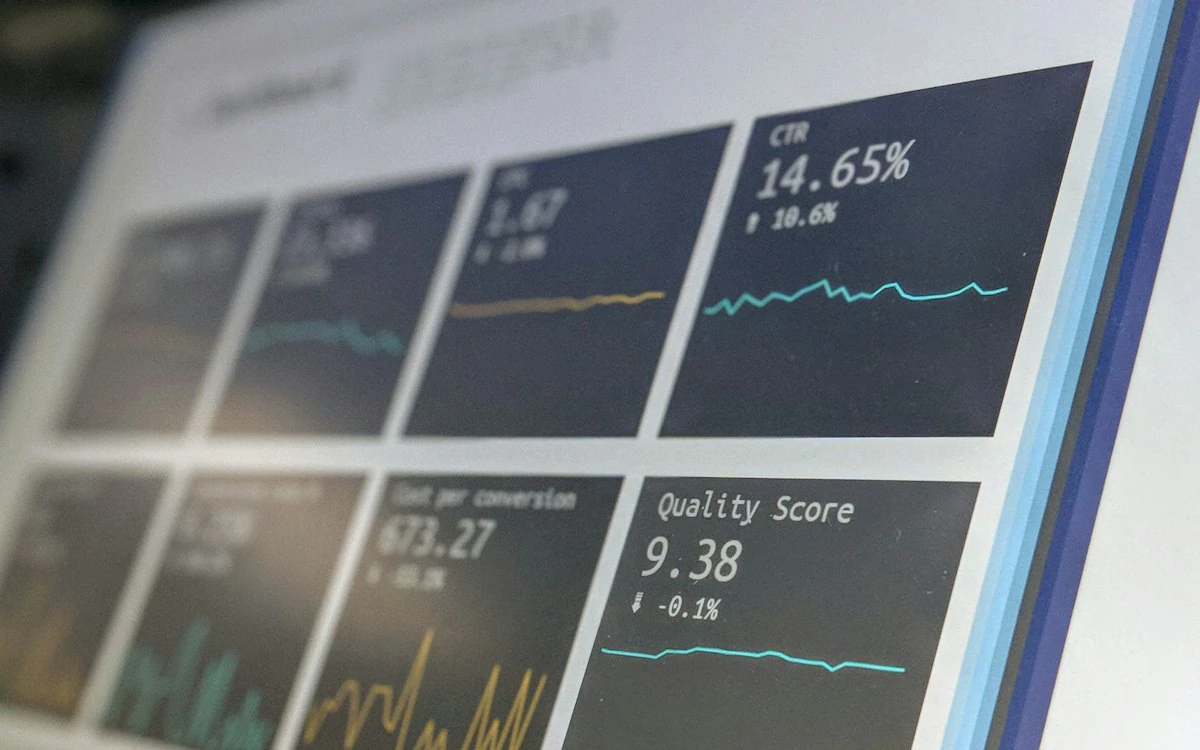
There's a specific, familiar feeling many founders and marketing leads know well: you open a monthly SEO report, and it looks good — green arrows, positive-sounding summaries, a headline number that's up. Then you look at your actual business results — leads, sales, real organic traffic in your own analytics — and something doesn't add up. The report says progress. The business doesn't feel it.
This gap is common enough that it's worth taking seriously as a pattern rather than assuming it's just you, or just your particular agency or team. This post covers why the gap happens, how to pressure-test any report you're currently receiving, and what it actually looks like to close it.
The Common Causes of the Gap
Cherry-picked metrics. SEO produces a lot of numbers, and not all of them are equally meaningful. Impressions, for instance, can rise dramatically while clicks and actual traffic stay flat — a page can appear in search results far more often without anyone actually visiting it, often because it's showing up for irrelevant or low-intent queries. A report that leads with "impressions up 40%" sounds like clear progress, and technically isn't false, but it may be entirely disconnected from anything that matters to your business. This gap has only widened as Google's AI Overviews have spread — Pew Research Center's analysis of real browsing data found that when an AI-generated summary appears above the results, users click through to a traditional listing only 8% of the time, versus 15% when no summary is shown (Pew Research Center, July 2025). A report showing "impressions up" while quietly omitting that clicks are down for exactly this reason isn't lying, but it's not telling you the full story either.
Delayed reporting cycles. Most SEO reporting happens monthly, which means you're always looking at a snapshot of what happened three to six weeks ago by the time you see it, compiled, summarized, and presented. If something went wrong in week two, you're often finding out about it in a report delivered near the end of week four or into the next month — a meaningful lag between a problem occurring and you becoming aware of it.
Vanity metrics over business metrics. Rankings, traffic, and impressions are all easier to report favorably than the metrics that actually matter to your business — leads generated, revenue attributable to organic search, or genuine engagement. A report can show plenty of "SEO activity" while telling you very little about whether any of it is actually working for your bottom line.
Reports compiled by the party being evaluated. This is the least discussed cause, and arguably the most structurally significant one. Whether it's an agency or an internal team, whoever produces your SEO report is also the party whose performance that report reflects. That doesn't require any bad faith to create a problem — it's simply a natural incentive to emphasize favorable numbers and frame unfavorable months charitably, the same way anyone summarizing their own performance tends to do, consciously or not.
This isn't just a hunch — it shows up clearly in industry-wide data. Adverity's 2025 marketing data quality research found that 45% of the data marketers rely on to make decisions is incomplete, inaccurate, or out of date, and 43% of CMOs said they lack confidence in more than half of their own marketing data (Adverity, "Fixing the Foundation: The State of Marketing Data Quality," 2025). If that many marketing leaders don't fully trust their own numbers internally, it's a reasonable bet that reports handed to a client or a business owner carry at least as much uncertainty, often without it being flagged.
How Monthly Reporting Cycles Hide Problems for Weeks
The lag built into monthly reporting deserves its own attention, because it's often the mechanical root of the "reports don't match reality" feeling, even when nobody involved is doing anything wrong.
Consider a realistic scenario: a technical issue gets introduced accidentally in week one of the month — say, a site update that unintentionally blocks a section of pages from being indexed. Nobody notices immediately, because nobody's actively watching for it between report cycles. By week three, that issue is quietly suppressing traffic to an entire section of the site. The monthly report, compiled at the end of the cycle, might still show positive numbers overall if other parts of the site performed well enough to offset the damage — masking a real, addressable problem inside an aggregate number that looks fine.
By the time the next report reveals the issue clearly (if it's caught at all, rather than attributed to "normal fluctuation"), five or six weeks have passed since the problem started. That's five or six weeks of preventable lost traffic, entirely a function of the reporting cadence rather than anyone's competence.
This isn't an argument that monthly reporting is inherently wrong — there's a real reason for it, since daily SEO fluctuation is often too noisy to draw conclusions from. It's an argument that monthly reporting alone, without any real-time visibility in between, creates a structural blind spot that has nothing to do with how good the underlying work is.
The same lag works in the opposite direction too, which is easy to overlook. A genuinely effective fix — resolving a critical technical issue, publishing a strong piece of content that starts gaining traction — also takes weeks to show up clearly in a monthly report. That means the positive feedback loop that keeps a team motivated and a business owner confident in the investment is similarly delayed, which can make good work feel invisible for longer than it should, right alongside bad problems staying hidden for longer than they should. Both distortions point to the same underlying fix: shorter feedback loops, not just better framing within the existing slow ones.
Questions to Ask to Pressure-Test Any Report
Whether you're working with an agency, an internal team, or evaluating a new vendor, these questions cut through vague or favorably-framed reporting quickly.
"Can I see this in my own Search Console and Analytics, not just your dashboard?" If the answer is hesitant, or you don't currently have direct access to your own accounts, that's worth addressing immediately — regardless of how good the relationship otherwise is. You should always be able to see the same raw data your report is built from.
"What specifically happened this month, in plain terms — not just the headline number?" A good report should be able to explain, specifically, what actions were taken (which pages, which fixes, which content, which outreach) and connect them to outcomes. A report that only shows aggregate numbers without connecting them to specific work is much harder to verify or learn from.
"What went wrong or underperformed this month?" Every real month of SEO work has something that didn't go as planned — a piece of content that didn't rank, an outreach campaign with a low response rate, a technical issue that took longer to resolve than expected. A report that never mentions anything negative isn't necessarily dishonest, but it's incomplete, and it's worth asking directly rather than assuming everything went perfectly.
"How does this connect to leads or revenue, not just traffic?" Traffic is an intermediate metric, not the actual goal for most businesses. If your report can't draw any line — even an approximate one — from SEO activity to business outcomes, you're missing the metric that actually matters to justify the investment.
"Can I see this data more often than monthly, even informally?" You don't need to abandon monthly reporting cadence, but asking for lightweight, more frequent visibility (a shared live dashboard, a quick weekly check-in) closes the multi-week blind spot described above, without requiring anyone to over-analyze noisy daily fluctuation.
What "Real-Time" SEO Tracking Actually Looks Like
The alternative to monthly, compiled reporting isn't "no reporting" — it's a live dashboard that shows the same data the people or systems doing the work are actually looking at, updated continuously rather than summarized on a schedule.
Concretely, this means: rankings that update as they change, not as of a snapshot taken weeks ago. Traffic and engagement numbers pulled directly from your own connected analytics, not restated from a separate reporting tool. Issue tracking that shows problems as they're detected, not discovered retroactively in a monthly summary. And critically, no intermediate step where someone selects which numbers to present to you — you're looking at the actual operational data, not a curated presentation of it.
This is a meaningfully different experience day to day. Instead of waiting for a scheduled report to find out whether last month worked, you can check in whenever you want and see current status. Instead of being told what happened after the fact, you can watch it happen and catch problems within days rather than weeks. This doesn't require you to obsessively monitor daily fluctuation — you're still free to check in on whatever cadence makes sense for you — but it removes the structural delay and the framing layer that causes the report-versus-reality gap in the first place.
A Realistic Example of the Gap in Action
Here's how this typically plays out in practice. A company receives a monthly report stating "organic traffic up 18% month over month" — a genuinely positive-sounding headline. Digging into their own analytics directly, the actual picture is more mixed: traffic to their core product pages, the ones that actually drive signups, was flat or slightly down. The overall increase came almost entirely from a spike in traffic to a single blog post that went unexpectedly popular for reasons unrelated to any deliberate SEO strategy — a tangential topic, not a core business page, that happened to catch a wave of interest.
Both framings are technically accurate. "Traffic up 18%" is true. So is "the pages that actually matter to the business didn't meaningfully improve." The report chose the framing that looked better, which isn't necessarily dishonest — it's the natural tendency to lead with the number that tells the more flattering story — but it left the business with a misleading impression of whether the core SEO strategy was actually working.
This is exactly the kind of gap that direct access to raw data closes quickly. Five minutes in Search Console, looking at traffic broken down by individual page rather than trusting the aggregate site-wide number, would have surfaced this immediately. The problem isn't usually that the underlying data is hidden — it's that nobody's looking past the headline number unless they know to ask.
How to Set Up Reporting You Can Trust
Whether you're working with an agency, an in-house team, or an AI-driven platform, the same principles apply to building reporting you can actually trust.
Insist on direct access to raw data sources. Your own Search Console, your own Analytics account, connected directly rather than mediated exclusively through someone else's summarized dashboard. This alone resolves a large share of reporting trust issues, because it means you're never entirely dependent on someone else's characterization of your own numbers.
Separate activity metrics from outcome metrics in how you review reports. Content published, technical issues fixed, and outreach emails sent are activity metrics — useful for understanding effort and pace, but not proof of results on their own. Rankings, qualified traffic, and business outcomes are what actually matter. A good report should clearly distinguish between the two, not blend them into one undifferentiated list of "wins."
Ask for real-time or near-real-time visibility, even if formal reporting stays monthly. This is the single highest-leverage change most businesses can make to close the reporting gap, and it doesn't require abandoning whatever formal reporting relationship already exists — it just adds a layer of ongoing visibility on top of it.
Treat consistently glowing reports with mild skepticism, not comfort. Real SEO work, done honestly, produces a realistic mix of wins, setbacks, and slow-moving progress. A report that's uniformly positive month after month, with no acknowledged setbacks or areas needing attention, is worth a closer look — not necessarily because something's wrong, but because it's an unusual pattern for genuine, ongoing work to produce.
This is precisely the gap platforms like QuikSEO are built to close by design — a live dashboard showing rankings, traffic, and issues as they change, pulled directly from your connected data sources, with no separate reporting step where numbers get selected and framed before reaching you. You see what the system sees, when it sees it, rather than a monthly summary of it.
FAQ
Is it fair to assume my agency or team is being dishonest if reports look better than reality?
Not necessarily, and it's worth avoiding that assumption as a starting point. The structural causes described above — cherry-picked but technically accurate metrics, reporting lag, and the natural bias of self-reporting — can produce this gap without anyone acting in bad faith. The fix is better reporting structure, not necessarily distrust of the people involved.
How often should I actually check my SEO numbers?
Weekly is a reasonable cadence for most businesses to catch emerging problems without over-reacting to normal day-to-day fluctuation, which is common and usually meaningless in isolation. Daily checking tends to create more anxiety than insight; monthly-only checking risks missing problems for weeks, as covered above.
What's the single most important reporting metric to focus on?
Whichever one most directly connects to your actual business goal — usually qualified traffic or leads, not raw traffic or impressions. Every business is a little different here, but the general principle is to prioritize outcome metrics over activity or vanity metrics whenever the two diverge.
Can real-time tracking replace the need for a monthly strategic review entirely?
No, and it's not meant to. Real-time tracking solves the visibility and trust problem; a periodic strategic review — monthly or quarterly — is still valuable for stepping back, evaluating overall direction, and making bigger prioritization calls that don't need to happen in real time. The two serve different purposes and work well together.
Does this problem only happen with agencies, or does it happen with in-house teams too?
It happens with both, and for the same underlying reason — whoever compiles the report has a natural incentive to frame their own work favorably, regardless of whether they're an external vendor or an internal employee. In-house teams aren't immune to this dynamic just because they work for you directly; the structural fix (direct data access, real-time visibility) applies equally to both situations.
What if I ask for direct data access and get pushback?
Treat this as a meaningful signal worth taking seriously. There are occasionally legitimate operational reasons for staged access during a project's early setup, but an ongoing, blanket refusal to give you visibility into your own site's Search Console and Analytics accounts is unusual and worth addressing directly as a condition of the relationship continuing, not something to quietly accept.
Is it possible to over-correct and become too focused on reporting instead of actual work?
Yes — obsessively auditing every number in real time can become its own form of unproductive noise, particularly since day-to-day SEO fluctuation is often meaningless in isolation. The goal of better reporting access is catching genuine problems early and understanding what's actually happening, not replacing trust in the work entirely with constant verification. A healthy middle ground is checking in on a sensible cadence with full access available if something feels off, rather than either blind trust or constant scrutiny.
How quickly should a real problem be visible if reporting is set up well?
With direct, real-time data access, a genuine issue — a technical error, a sudden ranking drop, a content problem — should be visible within days of occurring, not weeks. That's the core practical difference good reporting infrastructure makes: catching and correcting problems while they're still small, rather than discovering them fully formed in a report a month later.
Sources
- Adverity, "Fixing the Foundation: The State of Marketing Data Quality," 2025
- Pew Research Center, "Google Users Are Less Likely to Click on Links When an AI Summary Appears in the Results," July 2025 — [pewresearch.org](https://www.pewresearch.org/short-reads/2025/07/22/google-users-are-less-likely-to-click-on-links-when-an-ai-summary-appears-in-the-results/)
See your real numbers, live, with no one filtering them first — [try QuikSEO's dashboard for yourself].
See it running on your business.
A walkthrough built around how your team works today.